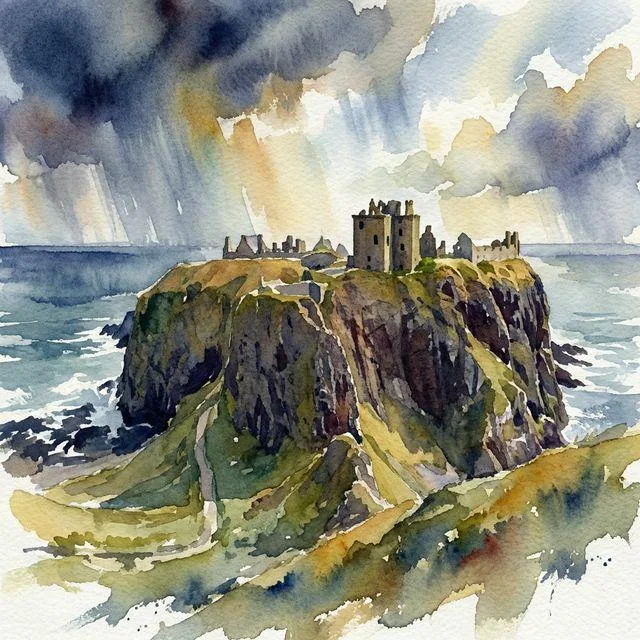
Dunnottar Castle stands on a headland of exposed rock above the North Sea, two miles south of Stonehaven in Aberdeenshire. The approach is a narrow path cut into the cliff face. On three sides, the rock falls directly to the sea. It has been a fortified site for more than a thousand years.
The oldest part of the standing structure is the thirteenth-century chapel. The brewery, bakehouse, and associated outbuildings date from the fifteenth and sixteenth centuries. The Whigs’ Vault is beneath the eastern range.
Several figures have been reported at the castle over an extended period. No connection between these accounts has been recorded. They are recorded here separately, as they were encountered separately.
The Brewery
The Green Lady is consistently described as a woman in a green tartan dress, most frequently seen inside the old brewery building and occasionally on the clifftop path to the south. Staff and visitors have reported her for many years. The reports have been acknowledged.
Her identity is not established. One account, given by the castle’s deputy custodian and reported in print, describes her as pre-Christian — a Pict, wandering the site in search of her children who converted to Christianity in the fifth century and were lost to her.
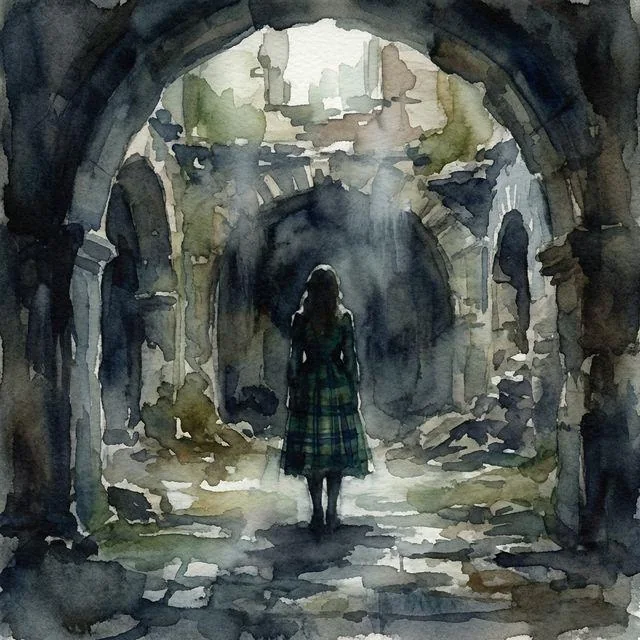
Accounts relating to the brewery describe a recurring sequence. In several accounts, those who report seeing her first describe a sudden drop in temperature and the sensation of being watched, followed — on turning — by the figure standing and facing them.
She does not move toward anyone. She does not speak. In several accounts, she is described as not walking but simply occupying a different position than she occupied a moment before, with no transition between the two.
One visitor, whose written account was submitted to a paranormal research organisation in 2022 and has been made available for this record, noted a specific detail not found in other accounts. She writes that the figure did not look lost. The word used is “proprietorial- as though the brewery were hers, and the visitor the anomaly.
The Guardroom
The soldier seen at the main entrance and guardroom is described as tall, fair-haired, and of a physical type consistently characterised as Scandinavian. He has been reported to have entered the guardroom. He has been reported standing at the main gate, facing outward, toward the sea.
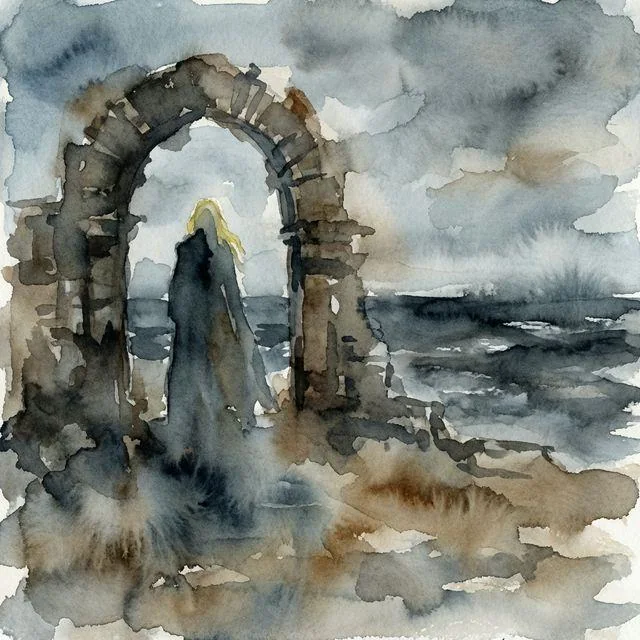
Viking forces attacked Dunnottar in the ninth century. King Donald II, King of Scotland, was killed in the assault. Whether the figure at the guardroom is connected to this period or to a later one is not known.
He has not been reported doing anything other than standing, entering the room, or looking out.
He has not been reported to look at anyone.
The Whigs’ Vault
In the summer of 1685, one hundred and sixty-seven men and women — Covenanters, imprisoned for refusing to acknowledge the religious authority of the Crown — were held in the vault beneath the eastern range. They were kept there for two months. Food and water were inadequate. Sanitation was not provided. A number attempted to escape by climbing the cliffs. Several fell. The number who died in the vault itself is not precisely recorded.
Among the memorials in the grass enclosure above the vault is a stone that reads: a bairn of nyn years. The date given is 1685.
At night, when the castle is closed, cries have been reported from within the vault. The reports appear in multiple independent sources. The deputy custodian’s published account refers to it without qualification.
No explanation has been offered by the castle or by any investigating organisation.
The memorial stone does not record a name.
The Chapel
In 1297, following the siege of Dunnottar by William Wallace, an unknown number of English soldiers who had taken refuge in the thirteenth-century chapel were killed when the building was set alight. Some accounts specify that those who fled the fire were driven over the cliff edge. No survivors are recorded.
The chapel still stands. It is the oldest structure on the rock.
Visitors to the chapel report nothing particular. The building is quiet. No accounts of activity have been recorded within the chapel, for the fact that almost no one, in any record consulted for this account, reports feeling anything inside it.
The Crown Jewels of Scotland were held at Dunnottar during the eight-month siege by Cromwell’s forces in 1651. They were smuggled out, hidden beneath the clothing of a woman named Mrs. Grainger and concealed beneath the floor of Kinnef Kirk, several miles to the south. The castle fell. The jewels were not found.
No record confirms the accounts described.
The castle remains open to the public.