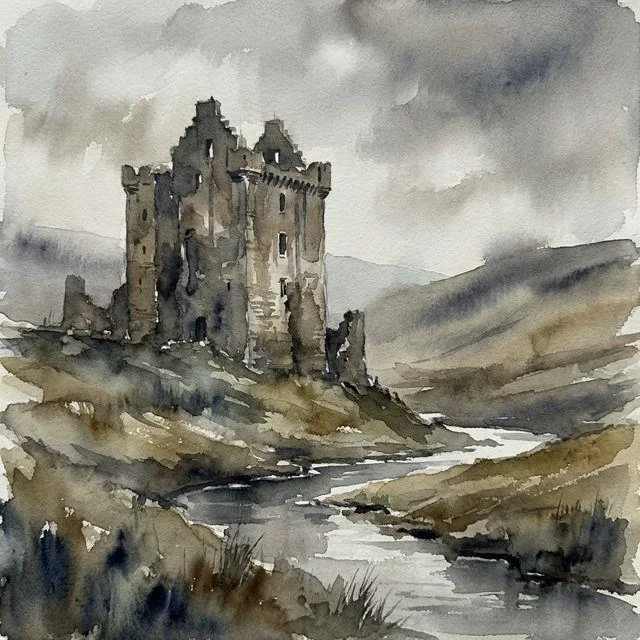
Crichton Castle stands on rising ground above the River Tyne in Midlothian, five miles south-east of Dalkeith. The oldest part of the structure is a fourteenth-century tower house, which successive owners extended over the course of three centuries. It is managed by Historic Environment Scotland and is open to the public.
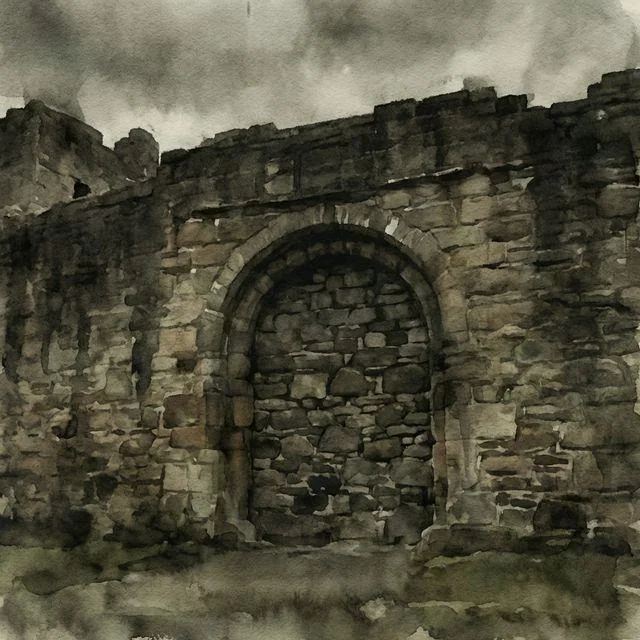
The original entrance to the castle no longer exists as an opening. It has been walled up. The stonework filling it is consistent with the surrounding masonry and gives no indication, from the exterior, that a gate was ever there.
The figure reported at Crichton enters through this wall.
The account appears in Martin Coventry’s Haunted Castles and Houses of Scotland and in several sources that draw from it. A horseman has been observed riding up to the castle and passing through the original entrance. In further detail noted in the same sources, the figure has been seen leaving the stable block across the field from the castle and crossing to the tower on the anniversary of Sir William Crichton’s death.
The date of Sir William Crichton’s death is not recorded in any source consulted for this account.
The tradition names an anniversary. The anniversary has no date.
Sir William Crichton was Chancellor of Scotland during the minority of James II. On the 24th of November 1440, he organised a dinner at Edinburgh Castle to which William Douglas, 6th Earl of Douglas, and his younger brother David were invited as guests. During the meal, a black bull’s head was placed before the Earl. The two brothers were taken from the table, subjected to a summary trial, and beheaded in the castle yard.
The young king, then ten years old, is recorded as having pleaded for their lives.
The event is known as the Black Dinner. Sir William founded Crichton Collegiate Church, a short distance from the castle, in 1449. It was endowed specifically so that priests would pray for his salvation.
He died before July 1454. No further specification appears in the record.
The stable block from which the figure is reported to have emerged was built in the late sixteenth century under Francis Stewart, 5th Earl of Bothwell. It postdates Sir William Crichton by several generations. Whether this is remarked upon in any account of the sightings is not recorded. It is not remarked upon in any source consulted here.
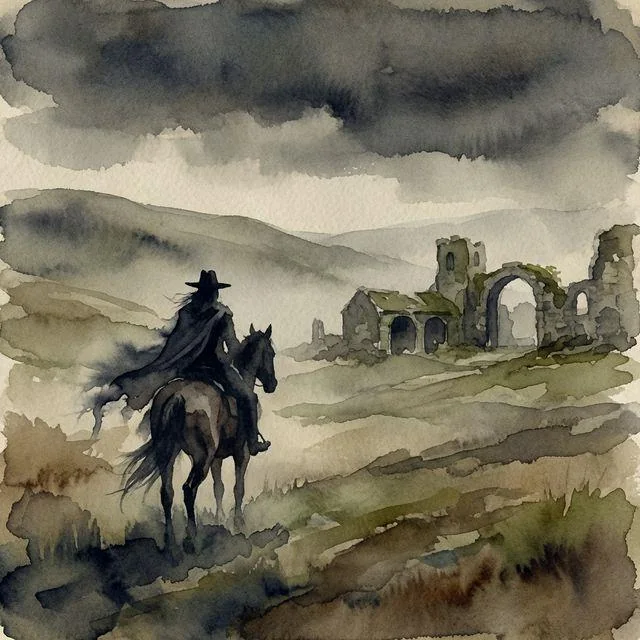
The accounts describe a horseman. They describe him crossing from the stables to the tower. They describe him entering through the original gate, which is now stone.
They specify that this occurs on the anniversary of his death.
The accounts do not record dates. No account found for this record states when the sighting occurred, or what point in the calendar it corresponds to. The sightings do not accumulate, in the available sources, around any identifiable date.
The tradition specifies an anniversary.
The date is not recorded.
The pattern remains.
The date does not.
No record confirms the accounts described.
The date is not recorded.