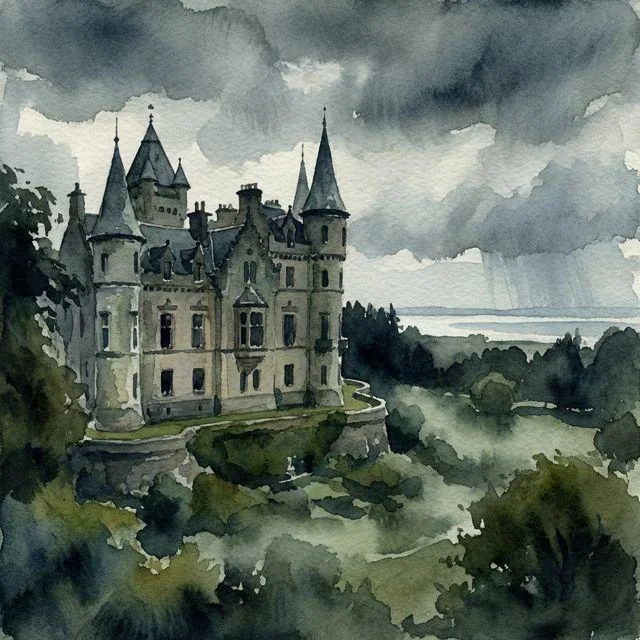
Dunrobin Castle stands above formal gardens on the Sutherland coast, overlooking the Dornoch Firth. Its upper floors housed a boys’ school between 1965 and 1972. Those who attended during this period, by general agreement, were not encouraged to speak about what some of them had heard at night.
Most did not speak of it.
Some did.
The castle has carried a particular story for at least two centuries. Its details vary in the telling, but its core remains the same.
A girl was confined in a room at the top of the north tower. The reason given depends on the source. Some accounts describe her as a Mackay, taken from her family and held at Dunrobin to resolve a blood feud through marriage — her consent an irrelevance, her compliance the entire point. Other accounts name her as a daughter of the castle itself, imprisoned by her own father for refusing a match, or for forming an attachment considered unsuitable. In these versions, she is sometimes given a name. In others, she is not.
All versions agree on what she did.
She knotted her bedsheets together. She attempted the window. She did not reach the ground.
The room at the top of the north tower has been sealed for as long as anyone employed at the castle can remember. Staff do not go there. No records consulted for this account specify when or why the decision to seal it was made, nor who made it. The decision appears not to have been formally recorded.
The following account was given by Daniel Marsh, who attended the school between 1968 and 1971.
The crying was what you noticed first. Not screaming — nothing like that. More like someone crying continuously. It came from above the dormitory. North side. I heard it three, maybe four times over two terms before I did anything about it.
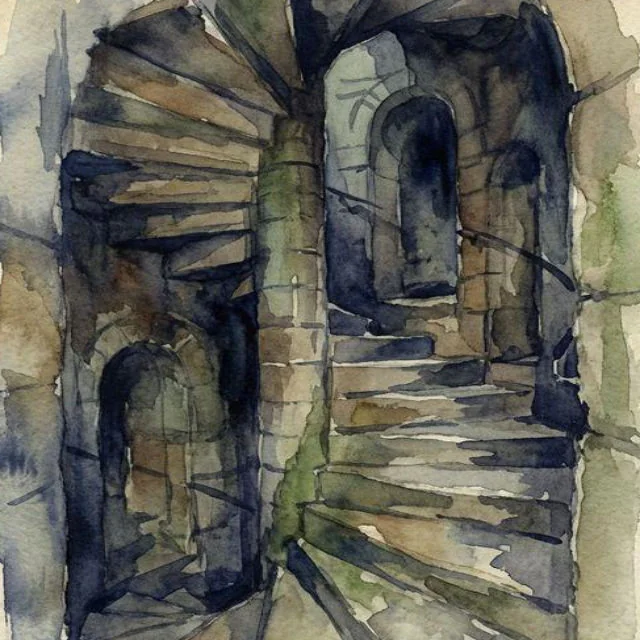
There were four of us. We went up after midnight. The staircase was stone and narrow, and the cold increased as you climbed. Not draughty cold. Something else.
The door had a wooden latch. No lock. I opened it.
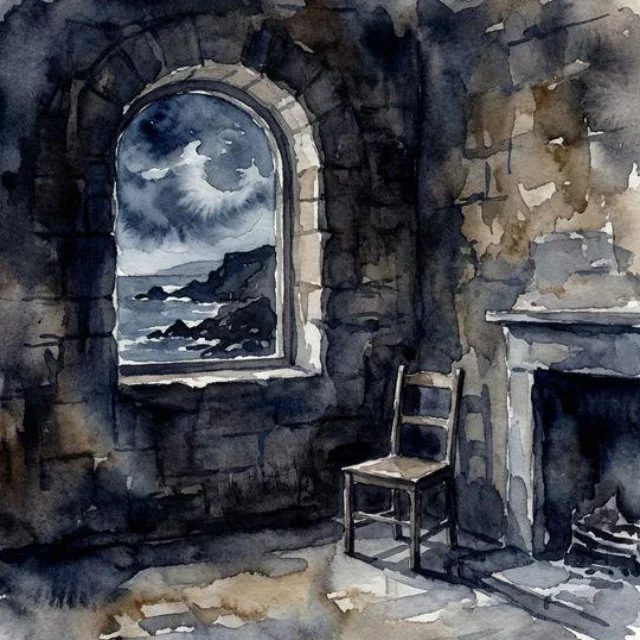
The room was empty. Small. One window, north-facing, old glass. No furniture, nothing on the floor. The crying had stopped the moment I lifted the latch.
I went to the window. The gardens were below, and the sea. It was — I remember thinking it was beautiful. I remained there for several seconds.
The cold on my left side wasn’t from the window. I turned around. There was nothing there.
I did not run. I pulled the door shut, and we went back down.
In the morning, my left shoulder was cold and damp as though someone had been standing very close.
Marsh reports that he did not hear the crying again after that night. He has not explained this.
His account is not unique.
A former groundsman employed at Dunrobin in the late 1950s, before the school occupied the building, noted in a letter to his brother — a letter not written for publication, recovered among family papers — that he had twice seen a light in the north tower window at a time when the upper floors were unoccupied and locked. He described the light as moving slowly back and forth within the room.
He did not specify whether he reported this to anyone.
The letter does not say.
The school closed in 1972. Dunrobin returned to private ownership and operates today as a visitor attraction, the formal gardens immaculate, the castle restored and well maintained. Tours of the principal rooms are available in season.
The north tower is not included in the tour.
No official record names the girl in the room. No death at Dunrobin under these circumstances appears in any document consulted for this account. The local oral tradition is consistent and long-standing, but oral tradition is not evidence.
What Daniel Marsh found on his shoulder in the morning was cold and damp, and gone by noon.
No record confirms the accounts described.
The room at the top of the north tower remains sealed.