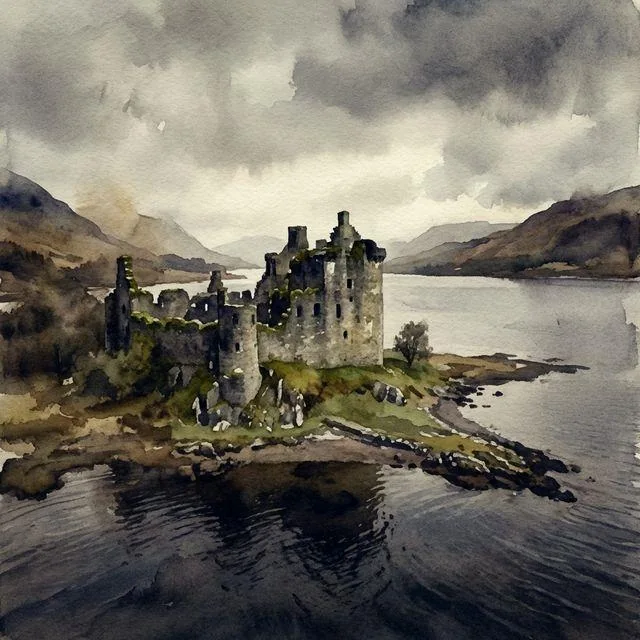
Kilchurn Castle stands on a narrow peninsula at the north-eastern end of Loch Awe in Argyll. It was built in the fifteenth century by Sir Colin Campbell and extended over the following two hundred years. In 1769, it was struck by lightning. A section of the east tower came down. The castle was abandoned shortly afterward and has been a ruin since.
The lightning struck the east tower from above.
What the east tower contained at that point is not recorded.
The accounts gathered from Kilchurn are few. They are not varied in their direction. They return with a consistency that is difficult to set aside to the same part of the building and in the same direction.
Up.
Visitors to the ground floor of the main range have reported, across a period of several decades, the sound of a child’s voice from somewhere above them. The accounts do not describe screaming. They describe something more sustained and more difficult to characterise — a sound of distress that has been going on long enough to have lost its urgency, that has settled into something closer to habit. Several accounts use the same word independently.
The word is patient.
The footsteps were reported in 2010 by two members of a visiting group, who submitted their report in writing. Both accounts describe the same sequence. They were standing in the lower room of the surviving section of the tower. Above them, clearly audible through the floor, were footsteps — measured, crossing the space above, pausing, crossing back.
They climbed to the upper room.
It was empty.
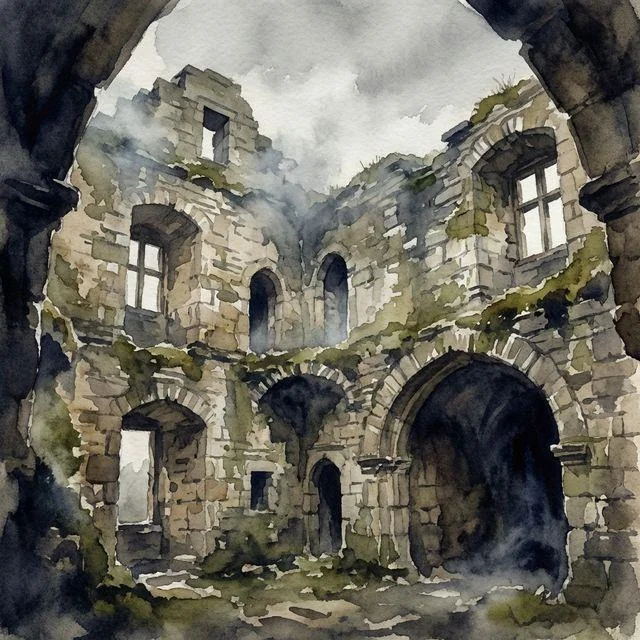
The two accounts diverge only on one point. One describes the room as simply vacant — bare stone, open sky where the roof had been, nothing to account for what they had heard. The other adds a detail that the first account lacks.
The floor, she writes, was cold in one specific area. Not the ambient cold of an unroofed room in autumn. A concentrated cold, occupying a space roughly consistent with where a person would stand if they were standing at the far wall, facing into the room.
She does not say she saw anything there.
She says she did not cross to that side of the room.
The woman known locally as the Witch of Kilchurn occupied the castle’s ground-floor rooms at some point in the latter half of the eighteenth century, after the abandonment, before the structure became entirely inaccessible. The precise period is not established. She collected tobacco from the settlement at the loch’s edge and returned to the castle. What she did there is not recorded.
What is recorded — in the sense that it has been reported consistently enough to constitute a record of some kind — is that she did not use the upper rooms.
This detail appears in three independent sources, none of which elaborates on it. It is stated as a fact about her habits, without comment.
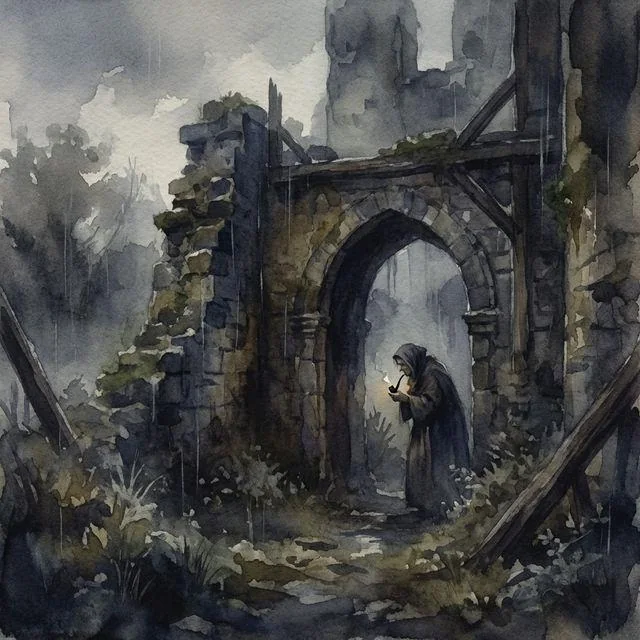
She died in the castle. The cause is not documented. The date is not documented. She was found, and she was dead, and the castle continued to stand around her absence as it had stood around her presence.
Visitors have reported smelling pipe tobacco in the lower rooms since at least the 1990s. No visual phenomenon accompanies the smell. It arrives without apparent cause and departs the same way.
It has not been reported in the upper rooms.
The strike of 1769 opened the east tower. The structural damage was assessed at the time as irreparable. The castle was vacated.
No record has been found that specifies what the upper rooms of the east tower contained at the time of the strike. No inventory of the castle’s contents made before abandonment has been located.
What the lightning opened onto — what it exposed, what it may have disturbed — is not described anywhere in the documentation consulted for this account.
The exposed section of the wall was not repaired. It was left as the lightning had made it — open to the weather, to the loch wind, to whatever the east tower had been holding since the castle was last occupied and used and understood.
The child’s voice has been reported at Kilchurn since the nineteenth century. The earliest account located for this record does not treat it as a new phenomenon. It is presented as something already established, already known, already part of the place's understanding.
The phrasing used is notable. The writer does not say the voice is heard in the castle.
He says it is heard from above.
The distinction is not explained. It may not have seemed to him to require one.
No record confirms the accounts described.
The castle remains standing.